If you've been pricing out a custom home or major renovation in Metro Vancouver lately, you may have noticed something unsettling: the numbers keep moving. Escalating trade tensions between Canada and the United States, including new tariffs and import restrictions announced this month, are rippling through the construction supply chain — and homeowners are asking us the same question on every consultation call: "Should we wait, or should we build now?"
The honest answer is neither simple nor one-size-fits-all. But after two decades building custom homes and laneway suites across the North Shore, Vancouver, and the Fraser Valley, we've learned that the builders who thrive during price volatility aren't the ones who panic or freeze — they're the ones who plan smarter. Here's what's actually happening to costs right now, and how to protect your project.
What the Tariffs Actually Mean for Your Build
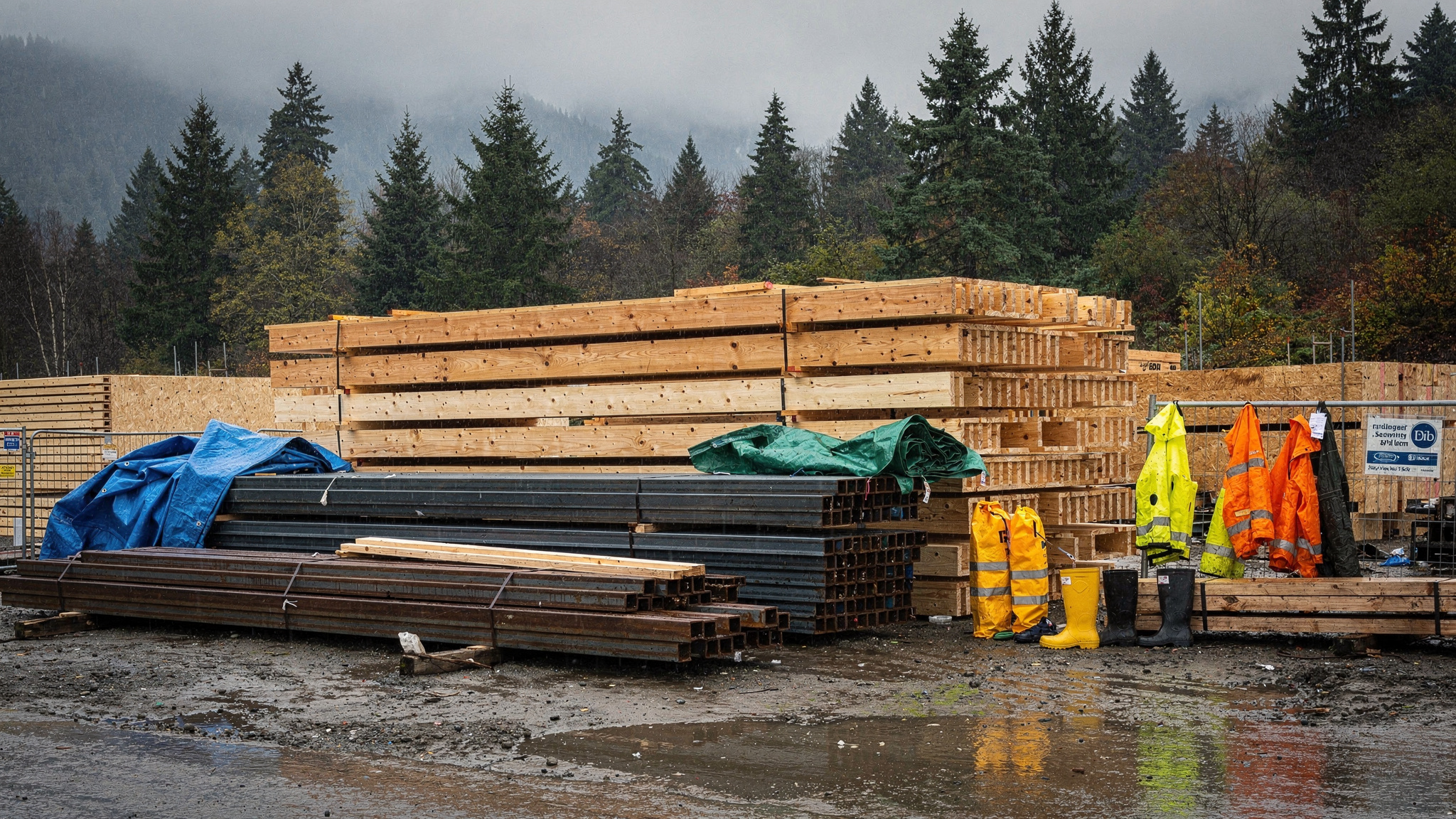
Roughly a third of the materials in a typical BC custom home — structural steel, aluminum window and door framing, certain HVAC components, specialty fixtures, and some finishing hardware — either originate in or pass through the United States before reaching Canadian suppliers. New tariffs and cross-border restrictions add cost at multiple points in that chain, and lumber tariffs (already a sore spot between Canada and the US for years) are compounding an already strained softwood market.
For a mid-size custom home in West Vancouver or Coquitlam, we're seeing early estimates suggest a 3-8% increase in landed material costs on items sourced through US-linked supply chains, with steel and specialty glazing hit hardest. That's not catastrophic on its own, but stacked on top of already-elevated labour costs and BC's tight trades market, it adds real pressure to fixed-price contracts signed even six months ago.
Why BC Builders Have an Advantage — If They Use It
Here's the good news: British Columbia sits on some of the best timber, stone, and manufacturing capacity in North America. Builders who lean into local and Canadian-sourced materials aren't just hedging against tariffs — they're often building better homes for the coastal climate.
- BC-milled dimensional lumber and engineered wood (LVL, glulam beams) from Interior and Fraser Valley mills avoids cross-border tariff exposure entirely and performs beautifully in our wet, seismic-active climate.
- Canadian-manufactured windows and doors from BC and Ontario suppliers now rival imported European systems in thermal performance, without the tariff-driven price swings.
- Local stone, brick, and concrete suppliers in the Lower Mainland reduce shipping costs and carbon footprint while supporting regional trades.
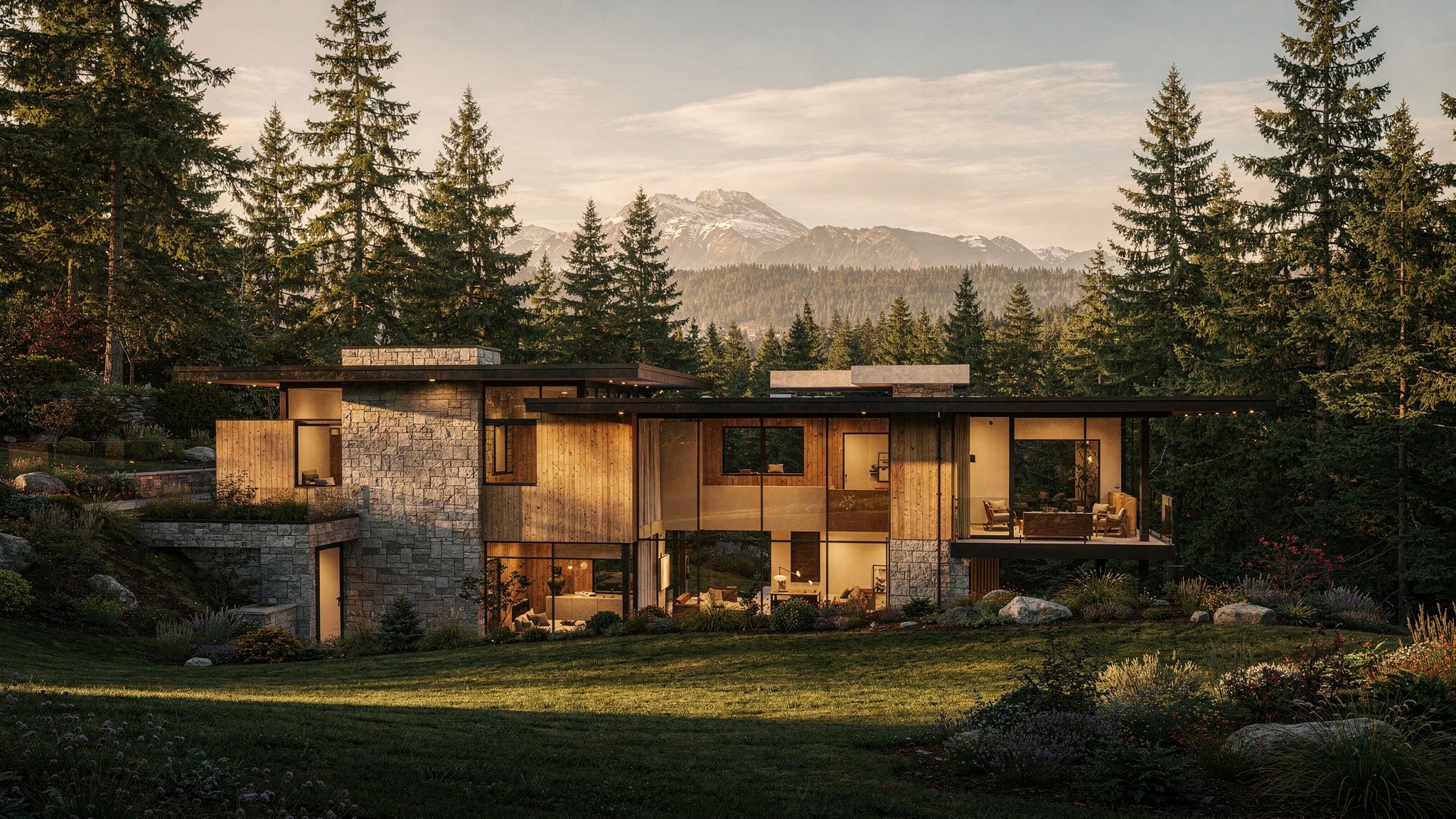
- West Coast Modern architecture — heavy on timber, glass, and natural stone — was always suited to local material palettes. This is a moment to double down on that design language rather than fight it.
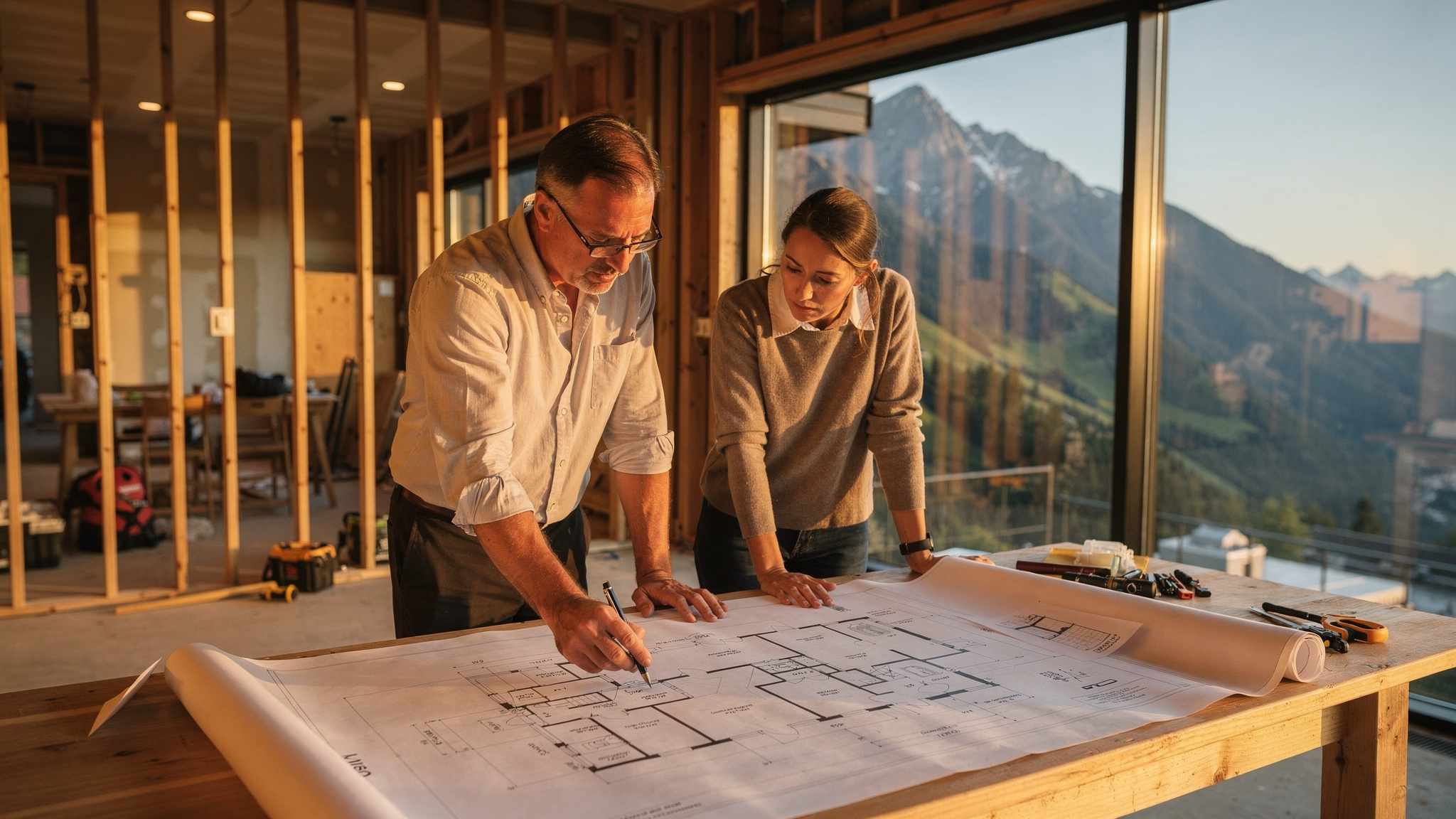
Timing Your Project: What Realistic Timelines Look Like Now
We're advising clients to think in three phases rather than trying to time the market perfectly:
- Design and permitting (3-6 months): Municipal approval timelines vary widely — Vancouver and Burnaby are running 4-6 months for custom home permits, while smaller jurisdictions like Delta or Port Coquitlam can move faster. Use this window to lock in material specifications and get quotes before further tariff escalation.
- Pre-purchase key materials: For clients with financing in place, we're now recommending early procurement of steel, windows, and mechanical systems once permits are close to issuance — securing pricing before another round of tariff adjustments.
- Construction (10-16 months for a full custom home): Realistic budgets for a high-end custom home in West Vancouver or North Vancouver currently range from $450-$650+ per square foot depending on site conditions, finishes, and structural complexity — and that range assumes some tariff buffer already built in.
Renovations and Laneway Suites: A Different Calculus
If a full custom build feels too exposed to volatility right now, renovations and laneway/legal suites remain a smart middle path. Smaller material volumes mean tariff exposure is proportionally lower, and Vancouver's laneway house program, along with Burnaby and Surrey's secondary suite bylaws, continue to make these projects some of the best value-per-dollar additions in the region.
There's also a federal incentive worth flagging: the CRA Home Accessibility Tax Credit allows eligible homeowners — particularly seniors or those renovating for accessibility — to claim up to $20,000 in qualifying renovation expenses annually. If your project includes widened doorways, no-step entries, or a ground-floor suite for aging parents, it's worth reviewing eligibility with your accountant before finalizing scope. Multigenerational living, in fact, is one of the fastest-growing reasons we're building laneway and legal basement suites across Richmond, Surrey, and Langley right now.
Protecting Your Budget: Practical Steps
Whether you're planning a custom home in West Vancouver or a laneway suite in New Westminster, a few disciplined habits make a real difference in a volatile material market:
- Ask your builder for a materials breakdown that flags tariff-exposed items specifically, not just a total cost estimate.
- Build a contingency of at least 8-10% into your budget rather than the traditional 5% — volatility, not just inflation, is now a factor.
- Lock in pricing on major systems (windows, roofing, HVAC) as early as your design allows, even before full permit issuance if your builder can structure a phased procurement agreement.
- Prioritize BC and Canadian suppliers for structural and envelope materials where quality is equal or better — this is both a cost hedge and a sustainability win.
- Revisit your design for opportunities to simplify steel or specialty glazing details without compromising the architectural vision.
Building With Confidence in Uncertain Times
Trade tensions and tariff headlines will keep shifting — that's simply the environment we're building in for the foreseeable future. But Metro Vancouver homeowners don't need to put their dreams on hold. What they need is a builder who tracks these shifts closely, sources intelligently, and structures contracts to protect clients from surprises rather than pass volatility straight through.
At LJH Construction, we review our supply chain and pricing assumptions continuously, and we build every custom home and renovation quote with realistic contingency and transparent material sourcing. If you're weighing whether now is the right time to break ground on a custom home, laneway suite, or major renovation anywhere from West Vancouver to Langley, let's talk through the real numbers for your project. Book a consultation with our team and get a grounded, current picture of what your build will actually cost — and how to build it smart.
Planning a project in Metro Vancouver?
Get a free, no-obligation quote from LJH Construction.